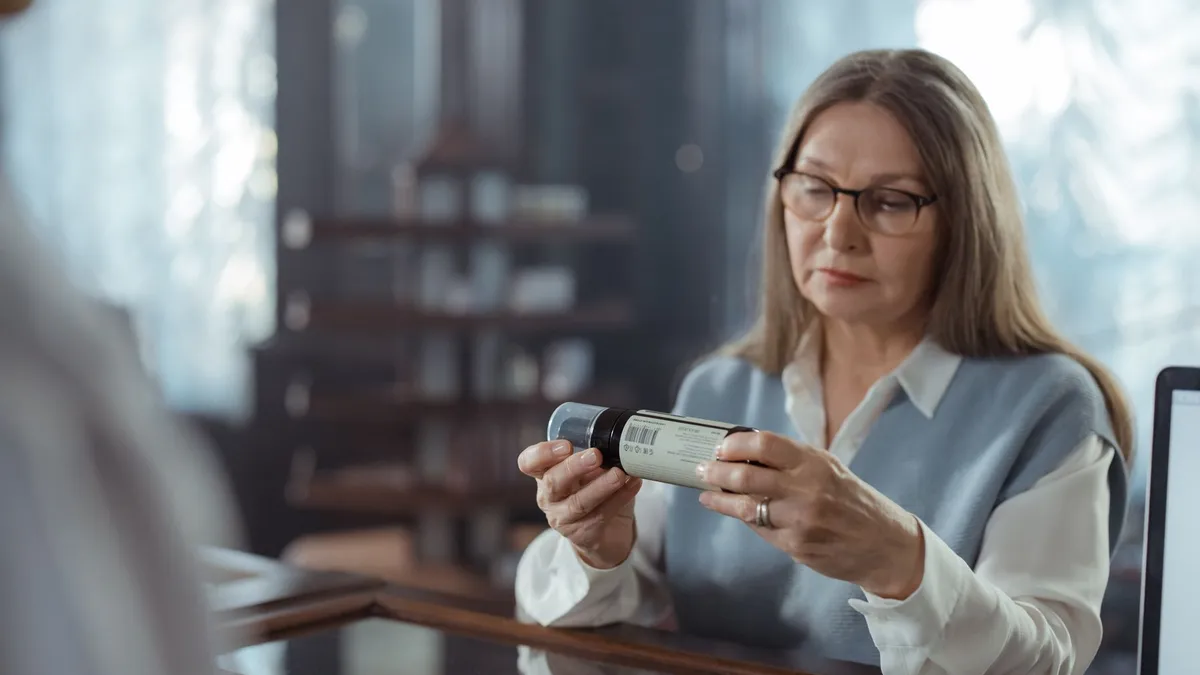
In the US, dietary supplements must carry a Supplement Facts panel. The FDA does not approve supplements before they're sold, so reading the label yourself is the best way to know what you're buying.
1. Serving size and servings per container
Everything on the label is per serving. Check whether a serving is one capsule or three. A bottle that looks cheap may only last ten days if the serving is large.
2. Amount per serving
This is the dose of each ingredient, in milligrams (mg), micrograms (mcg) or, for probiotics, CFU (colony-forming units). Compare it with the doses used in research. A popular ingredient at a tiny dose may do very little.
3. % Daily Value
For vitamins and minerals, %DV tells you how much of the daily recommendation one serving gives. Many herbs, fibers and probiotics have no official daily value, so you'll see an asterisk instead.
4. Proprietary blends
A "proprietary blend" lists the ingredients but only the total weight of the blend, not how much of each. It's legal and common, and companies use it to protect their formula, but it makes the product harder to compare.

5. Probiotic strains
The best labels name the genus, species and strain, for example Lactobacillus rhamnosus GG, plus the CFU count "at time of expiration", not just "at time of manufacture".
6. Other ingredients
This lists the capsule material, fillers and additives. Check it for allergens, gelatin (if you avoid animal products) and colorings.
7. Quality seals
Seals from USP, NSF or similar independent programs mean the product was tested for what's on the label and for contaminants. "Made in an FDA-registered facility" means the factory is registered, which is required; it doesn't mean the product is approved.
8. Claims and the FDA disclaimer
Supplements can say they "support" a body function, but they can't claim to cure or treat a disease. Those claims must carry the FDA disclaimer. Be careful with labels or ads that promise dramatic results.
Want to go further? Our guide on how to spot a supplement scam covers the sales side.
We explain the research behind popular supplements in plain English. This article is for information only and is not medical advice. How we review.
Keep reading
 Scam Checks
How to Spot a Weight-Loss Supplement Scam Before You Buy
Seven red flags to check before you enter your card details.
 Scam Checks
How to Get a Refund on a Supplement You Bought Online: Step by Step
A money-back guarantee is only useful if you know how to use it. Here's exactly what to do, before and after you buy.
 Gut Health
 and Weight Loss: How Your Microbiome Affects Your Waistline
What gut bacteria have to do with appetite, cravings and blood sugar.