

Not sure what's causing yours? Take the 60-second hair check ↓
Rosemary oil went viral for a reason. For once, a natural hair remedy didn't just have before-and-after photos, it had a head-to-head clinical trial against the most famous hair loss drug in the world. And it held its own.
If you're here, you've probably already tried the "easy" version
Nobody searches for rosemary oil on a good hair day. You search for it the night you catch your reflection under the bathroom light and think, when did my part get that wide?
The video. Someone on your feed swears rosemary gave her back her ponytail. You watch it twice. Then three more just like it.
The pot on the stove. You simmered rosemary sprigs into "rosemary water," poured it into a spray bottle and used it for a week. The kitchen smelled wonderful. Your part didn't change.
The tiny brown bottle. Maybe you bought pure rosemary essential oil, dabbed it straight on your scalp, and it stung so much you gave up by Thursday.
The drain, still. And through all of it, the same moment after every wash: strands wrapped around your fingers, gathered fast and thrown away before anyone sees.


Does rosemary oil really help hair growth?
In 2015, researchers published a randomized trial in the journal Skinmed. People with androgenetic alopecia (pattern hair loss) used either rosemary oil or 2% minoxidil on their scalp for six months. At three months, neither group had changed much. At six months, both groups had a significant increase in hair count, with no meaningful difference between them, and the rosemary group reported less scalp itching.
That's the study behind every rosemary video you've seen. Two lessons hide inside it: rosemary oil can work as well as a drug for some people, and it takes about six months. That second part is where most people go wrong.
How rosemary oil works on the scalp
- Circulation. Rosemary and scalp massage boost blood flow to the follicle, delivering more oxygen and nutrients.
- A calmer scalp. Rosemary has anti-inflammatory and antioxidant compounds, and a calm scalp is a better place for hair to grow.
- Pattern hair loss. Lab research suggests rosemary may interfere with DHT, the hormone behind pattern hair loss, which would explain the trial results.

How to use rosemary oil for hair growth (step by step)
- Never use pure essential oil straight. Dilute it in a carrier oil, or use a ready-made blend.
- Apply to the scalp, not the hair. Part your hair and use a dropper along the thinning areas.
- Massage for 2 to 3 minutes. This is half the benefit: circulation matters.
- Leave it on for a few hours or overnight, then wash.
- Use it 2 to 3 times a week and keep going for at least 6 months.
- Take the same photo once a month, same light, so you can see progress you'd otherwise miss.
Rosemary Water for Hair: Does It Work? (Rosemary Water vs. Oil)
Rosemary water is all over social media: a pot of rosemary sprigs on the stove, a spray bottle, a daily spritz. It smells wonderful and it feels like you're doing something. But here's the part almost nobody mentions: there's no clinical trial showing that rosemary water grows hair.
The study everyone quotes, the one where rosemary matched 2% minoxidil after six months, was done with rosemary oil. Not water. Not tea. Oil, massaged into the scalp.
And the difference matters. Much of rosemary's power is in its essential oil, and boiling sprigs in water sends a good part of it into the air as steam instead of into your spray bottle. Rosemary water is a light, diluted rinse that goes off within a week in the fridge. The oil is concentrated, it stays on the scalp, and it's the form that was actually tested.
| Rosemary water | Rosemary oil blend (WellaNaturals) | |
|---|---|---|
| Clinical research for hair growth | None | Rosemary oil matched 2% minoxidil in a 6-month trial |
| Strength | Light, diluted | Concentrated: 40% rosemary oil |
| Stays on the scalp | Runs off and evaporates | Massaged in, left on for hours |
| Shelf life | About a week | Months |
| Extra support | None | Castor oil for the root, lavender for an itchy scalp |
So if you love your rosemary spray, keep it as a fresh daily rinse. But if what you want is more hair, a narrower part and fewer strands in the drain, use the form that was studied: a concentrated rosemary oil. That's exactly why WellaNaturals Hair Oil is built on 40% rosemary oil, and why women who switch from rosemary water to the oil finally stop wondering if it's working.
Rosemary oil before and after: what to expect
| When | What's typical |
|---|---|
| Weeks 1–4 | A calmer, less itchy scalp. No visible growth yet: this is where most people quit. |
| Months 2–3 | Less shedding in the brush and shower. |
| Months 4–6 | Baby hairs along the part and temples, fuller-looking hair; this is when the trial saw results. |
Mistakes that make rosemary oil "not work"
- Quitting at week 4. The trial showed no difference at three months; the results came at six.
- Using pure essential oil. It burns, irritates and makes people stop.
- Putting it on the hair instead of the scalp. The follicle is what needs it.
- Skipping the massage.
- Ignoring nutrition. A follicle with no raw materials can't build a strong strand.
Rosemary oil vs. everything else on the shelf
If you've been at this for a while, you've probably tried at least two of these. Here's how they really stack up:
Cheap, and it smells great.
The catch: far too weak to reach the kind of concentration used in the study.
Strong, but harsh.
The catch: it burns and irritates, so almost nobody lasts the six months it takes.
Volume for a day.
The catch: it all washes down the drain. Nothing changes at the root.
The drug rosemary was tested against.
The catch: you're tied to it for life. Stop, and the shedding usually comes back.
40% rosemary in gentle carrier oils, 2–3 times a week.
Strong enough to matter, gentle enough to use for six months. Our pick: WellaNaturals.
Biotin, zinc, horsetail and vitamins C, B3, B5, B6.
For shedding all over, about $49 a month. Our pick: Rosedil.
What quitting at week four really costs

The trial is clear: at three months, rosemary and minoxidil both looked like they weren't doing much. At six, both worked. That gap is exactly where most women give up, and here's what it costs them:
- Starting over. Every restart puts you back at week one of a six-month clock.
- Another bottle in the cabinet: another serum, another shampoo, another $40 that never got the time to work.
- Another season of hiding: the clip, the flipped part, the hat on a cloudy day.
- And the follicles that were only struggling this year keep shrinking. A shrinking follicle can still respond. One that's been squeezed for years is much harder to bring back.
The best rosemary oil is the one you'll actually use for six months. That's why the format matters more than the price tag.
The best rosemary oil for hair growth
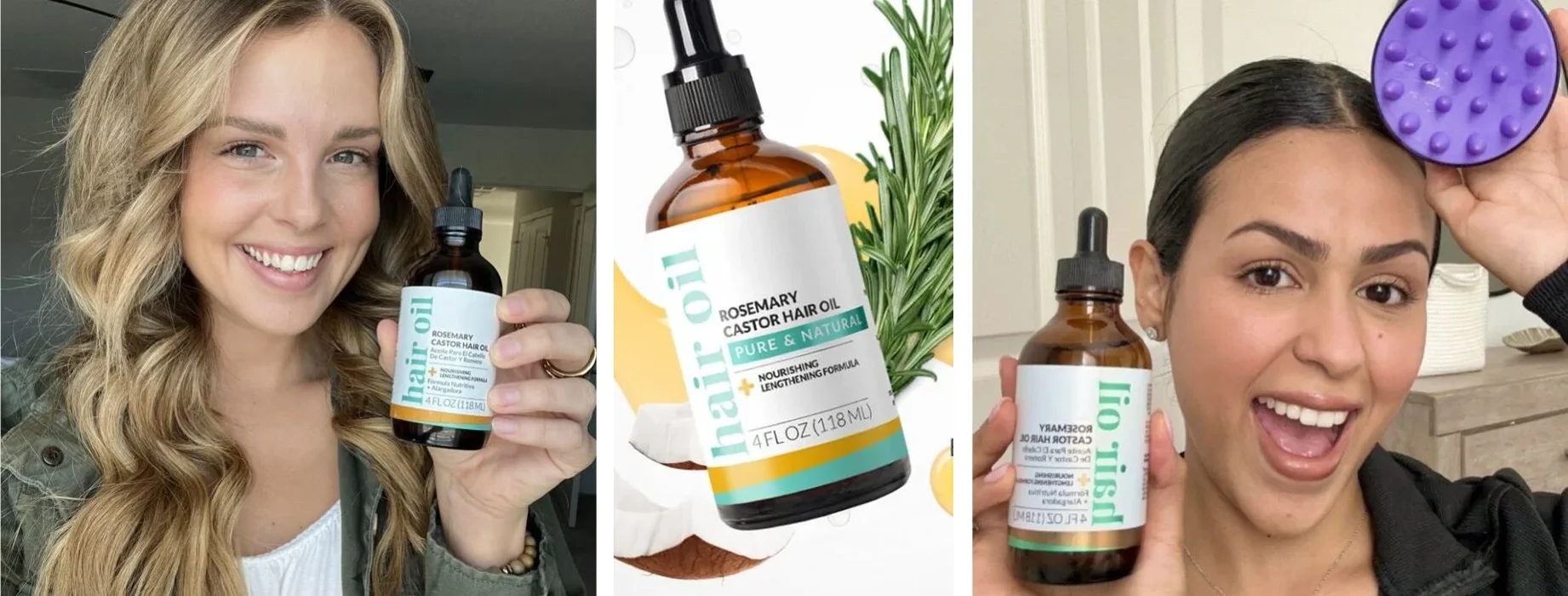
Look for a blend that's concentrated enough to work but gentle enough to use for months, with carrier oils that also help the hair. That's exactly what WellaNaturals Hair Oil is: 40% rosemary oil, one of the most concentrated blends available, mixed with castor oil to strengthen roots, coconut and olive oils to seal in moisture, and lavender to soothe the scalp. It comes with a dropper and a scalp massager, and you only need it 2 to 3 times a week.
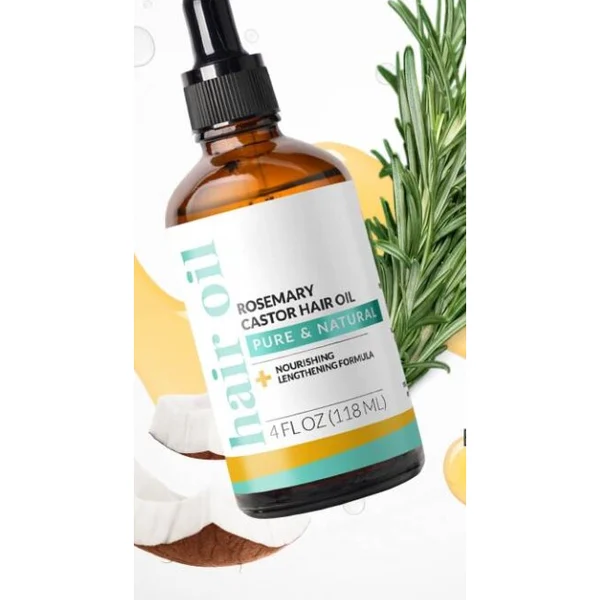
WellaNaturals Hair Oil
The rosemary oil routine done right: 40% rosemary in a gentle, ready-to-use blend with castor, coconut, olive and lavender, plus a scalp massager.
- 40% rosemary oil, the ingredient that matched minoxidil
- Castor, coconut, olive and lavender
- Only 2–3 times a week
- 30-day money-back guarantee
Inside or outside? Find out what YOUR hair actually needs
Here's the thing almost nobody explains: thinning hair has two very different starting points. Treat the wrong one and you can spend months "doing everything right" and see nothing. Treat the right one, and the change can start in weeks.
THE 60-SECOND HAIR CHECK
Tick everything you've noticed in the last few months
Why? See what each side means
Your follicles are starving
Every strand is built from nutrients your blood delivers to the root. When that supply drops, your body cuts hair first, because hair is the one thing it can live without.
You'll recognize it if:
- Hair is falling out all over, in the brush, the drain and on the pillow
- It started after weight loss, a diet, a GLP-1 medication, stress or illness
- Your hair feels thinner, drier and more brittle and grows slowly
- Your nails break easily too
What you need: to end the starvation at the root, because no shampoo or spray can feed a follicle from the outside. For these signs we point women to Rosedil: 4,620 mcg of biotin, zinc, horsetail and vitamins C, B3, B5 and B6, every nutrient your follicles use to build a strand, in two capsules a day. Buyers most often mention noticing it first exactly where it hurt most: fewer strands on the pillow, a cleaner drain, a brush you no longer clean as you go. And the price? The best-known dermatologist-recommended hair supplement costs $79 to $88 a month. Rosedil is $49 a month on the 6-month kit: six full months for less than four months of the famous brand, with a 60-day money-back guarantee.
Your follicles are being squeezed
Sometimes the nutrients are there, but the follicle itself is under attack: hormones (DHT) slowly shrink it, circulation in the scalp drops, and an irritated scalp makes it worse.
You'll recognize it if:
- Your part is getting wider or the crown looks see-through
- Your temples or hairline are thinning
- It came on gradually, with no clear trigger, or around menopause
- Your scalp is itchy, dry or flaky
What you need: to take the pressure off the follicle right where it lives, because a pill alone can't reach what's squeezing it. For these signs we point women to WellaNaturals Hair Oil: 40% rosemary oil, the natural ingredient that matched 2% minoxidil in a clinical trial, massaged into the scalp 2 to 3 times a week. No prescription, no "using it forever." The first thing buyers usually mention is a calmer, less itchy scalp; then, month by month, the part stops being the first thing they check under the bathroom light. Prefer something quicker and lighter? Emika Growth Spray puts caffeine and biotin on your scalp in two seconds a day.
Each one works on its own. Signs on one side? Start there. Signs on both? Start with the side where most of your signs are; adding the other later covers both causes at once. On a tight budget? Emika Growth Spray is the gentlest way to start, at about $18 a bottle. Every option has a money-back guarantee, and thinning hair never stands still, so the only real mistake is waiting another season. Want to compare everything side by side? See our full guide to the best products for thinning hair.
Six months from now, which mirror will you be standing in front of?

In one, you're still scrolling rosemary videos at night. The rosemary water came and went, the essential oil sits half full in a drawer, and the part is a little wider than it is tonight.
In the other, you stuck with it. Somewhere around month four you noticed tiny new hairs along your part, the ones that stand up when you brush. The drain has less in it. You've stopped flipping your part to hide it.
It's the same six months either way. The only difference is whether they start tonight, with a blend you'll actually keep using. And with a money-back guarantee, starting costs you nothing.
The bottom line
Rosemary oil is one of the very few natural hair remedies with a real clinical trial behind it. Use a gentle, concentrated blend on the scalp, massage it in, feed your follicles from the inside, and give it six months. That's how rosemary goes from viral video to real results.

Audrey Larson
Audrey Larson is a health journalist and wellness investigator with more than 10 years of experience covering supplements, nutrition, and consumer health. With a background in Biomedical Science and Clinical Research, she specializes in analyzing scientific evidence behind health products and debunking misleading claims, misinformation, and fake health trends. As a Health & Wellness Evaluation Specialist for Olivewell Report, Audrey reviews peer-reviewed research, ingredient transparency, and manufacturing standards to separate fact from fiction. Her work emphasizes scientific integrity and practical guidance, helping readers make informed decisions about their health and well-being.
Keep reading
 Skin, Hair & Nails
Castor Oil for Hair Growth: How to Use It, How Long It Takes, and the Blend That Makes It Easier
Grandma swore by it, and now it's all over social media: a few drops of castor oil on the scalp for thicker, longer hair. Here's exactly how to use castor oil for hair growth, why so many women give up on it, and the blend that makes it easy.
 Skin, Hair & Nails
Best Hair Growth Oil (2026): Rosemary, Castor and What Actually Works for Thinning Hair
Rosemary, castor, coconut, pumpkin seed: every oil promises thicker hair. Only a few have real research behind them. Here's which hair growth oils actually work, how to use them, and the one we'd buy.
 Skin, Hair & Nails
Hair Growth Spray: Do They Work? Caffeine, Biotin and the Easiest Routine for Thinning Hair
Not everyone wants to massage oil into their scalp three times a week. Hair growth sprays promise the same benefit in two seconds a day. Here's what they can really do, which ingredients matter, and how to choose one.