
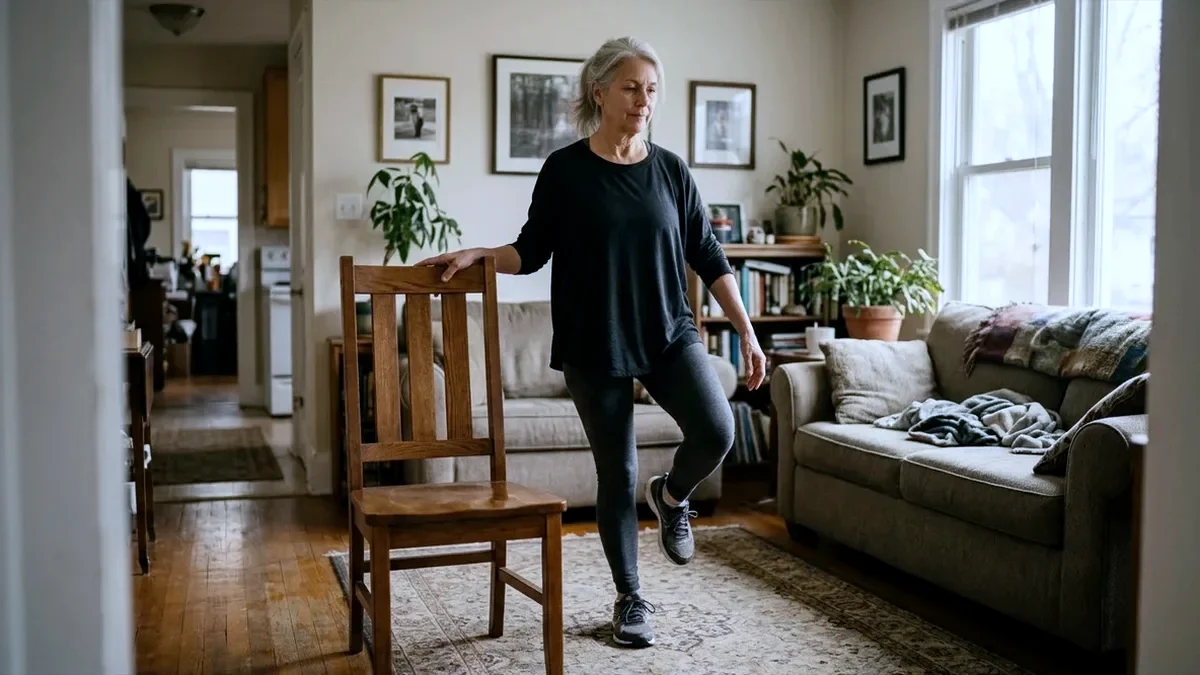
Falls are one of the biggest health risks after 65. The CDC reports that about one in four older adults falls each year, and that many falls are preventable. Balance training is one of the most effective ways to lower that risk.
Why balance gets worse
- Muscle loss in the legs and hips, especially if you sit a lot
- The inner ear (vestibular system), which senses head movement, becomes less sensitive with age
- Vision changes, including bifocals and progressives that blur the floor
- Less feeling in the feet, from nerve changes or diabetes
- Medications for blood pressure, sleep or mood can cause dizziness
7 simple balance exercises for seniors
Do them near a counter or sturdy chair for support. Start with a few minutes a day.
- Single-leg stand: hold the counter and lift one foot for 10 to 30 seconds. Switch.
- Heel-to-toe walk: walk a straight line placing your heel right in front of your toes.
- Sit-to-stand: stand up from a chair without your hands, 10 times.
- Heel raises: rise onto your toes and lower slowly, 10 to 15 times.
- Side steps: step sideways along the counter, 10 steps each way.
- Head turns while walking: walk slowly while turning your head side to side, to train the inner ear.
- Tai chi or Nordic walking: both have research behind them for steadier balance in older adults.
Around the house
- Remove loose rugs and clutter from walkways
- Add night lights between the bedroom and bathroom
- Install grab bars in the shower
- Wear shoes with thin, firm soles
- Stand up slowly, especially at night
When dizziness needs a doctor
A spinning feeling (vertigo), sudden dizziness, fainting, or dizziness with chest pain, weakness, trouble speaking or vision changes needs medical attention right away. Ringing in the ears with dizziness can be a sign of an inner ear problem a doctor should check.
A simple 10-minute daily routine
| Exercise | How much |
|---|---|
| Single-leg stand (holding the counter) | 3 × 20 seconds each leg |
| Sit-to-stand | 2 × 10 |
| Heel raises | 2 × 12 |
| Heel-to-toe walk | 2 lengths of the hallway |
| Side steps | 10 steps each way |
As it gets easier, hold the counter with one finger instead of your whole hand, then try closing your eyes for a few seconds. Most people feel steadier within three to four weeks.
Your inner ear and balance
Deep in each ear, tiny fluid-filled canals tell your brain which way your head is moving. With age, these sensors become less sensitive, and conditions like benign paroxysmal positional vertigo (BPPV), caused by tiny crystals that shift out of place, become more common. BPPV causes short bursts of spinning dizziness when you roll over in bed or look up, and a doctor or physical therapist can often fix it with simple head movements.
Where a supplement fits
Exercise comes first. Some adults also look for nutritional support for the inner ear and circulation. We reviewed VertiAid, one of the most searched balance formulas, including what's inside and its guarantee.
Frequently asked questions
Why is my balance getting worse with age?
Weaker leg muscles, changes in the inner ear, vision changes, less feeling in the feet and some medications all affect balance with age.
Can you improve balance after 60?
Yes. Balance improves with practice at any age, and simple daily exercises can make a noticeable difference in a few weeks.
What is the best exercise for balance?
Standing on one foot, heel-to-toe walking and sit-to-stands are simple and effective. Tai chi is also well studied for older adults.
How long does it take to improve balance?
Many people feel steadier after three to four weeks of daily practice.
What causes sudden dizziness when standing up?
Often a quick drop in blood pressure. Stand up slowly, stay hydrated, and talk to your doctor if it happens often or you faint.
When should I worry about dizziness?
Get help right away for sudden dizziness with chest pain, weakness, trouble speaking, vision changes or fainting.
This article is for information only and is not medical advice.

Audrey Larson
Audrey Larson is a health journalist and wellness investigator with more than 10 years of experience covering supplements, nutrition, and consumer health. With a background in Biomedical Science and Clinical Research, she specializes in analyzing scientific evidence behind health products and debunking misleading claims, misinformation, and fake health trends. As a Health & Wellness Evaluation Specialist for Olivewell Report, Audrey reviews peer-reviewed research, ingredient transparency, and manufacturing standards to separate fact from fiction. Her work emphasizes scientific integrity and practical guidance, helping readers make informed decisions about their health and well-being.
Keep reading
 Healthy Aging
Leg Cramps at Night: Why They Happen After 45 and How to Stop Them (Fast Fixes + Magnesium)
It always strikes at the worst moment: deep asleep, and suddenly your calf locks into a rock-hard knot. Nighttime leg cramps become much more common after 45. Here's why they happen, how to stop one in seconds, and how to keep them from coming back.
 Healthy Aging
Best Blood Sugar Supplements (2026): Our Top Picks Compared
Afternoon crashes, sugar cravings and readings that keep creeping up. If you're looking for a blood sugar supplement that's actually worth your money, here's how the three most popular liquid formulas compare, and which one we'd choose.
 Healthy Aging
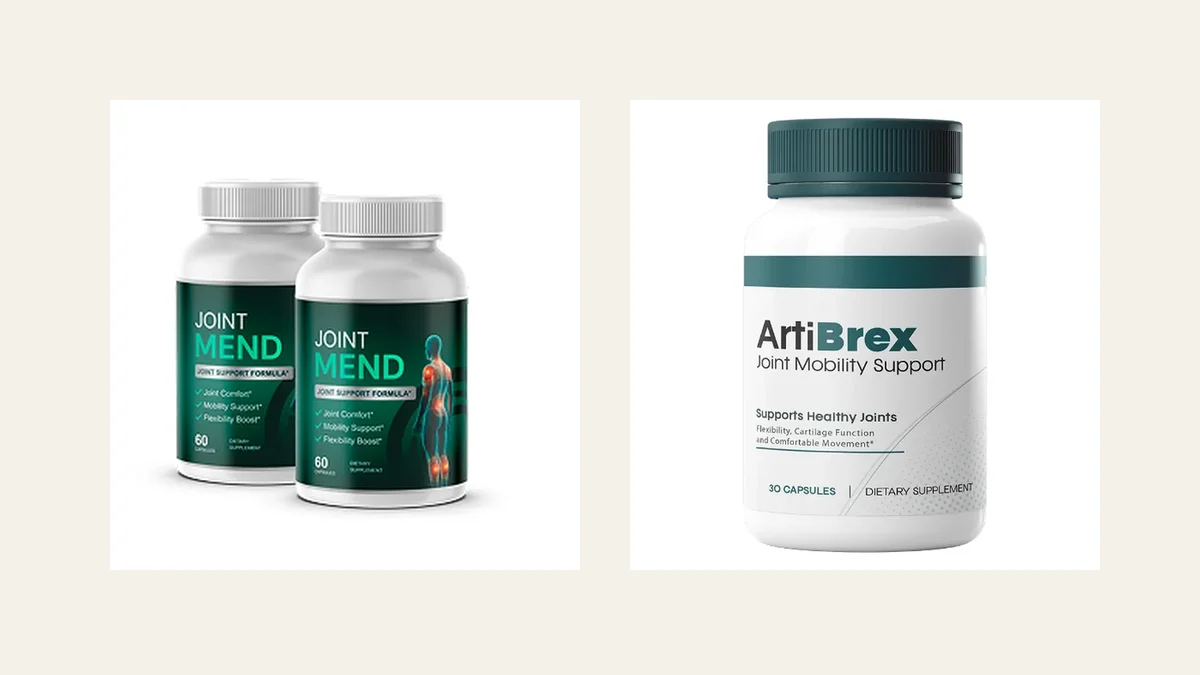
Best Joint Supplements (2026): Our Top Picks for Stiff, Achy Joints
Stiff mornings, stairs you dread, hands that ache when you open a jar. If you're looking for a joint supplement that's worth your money, here's how the two most promising formulas compare, and which one we'd choose.