
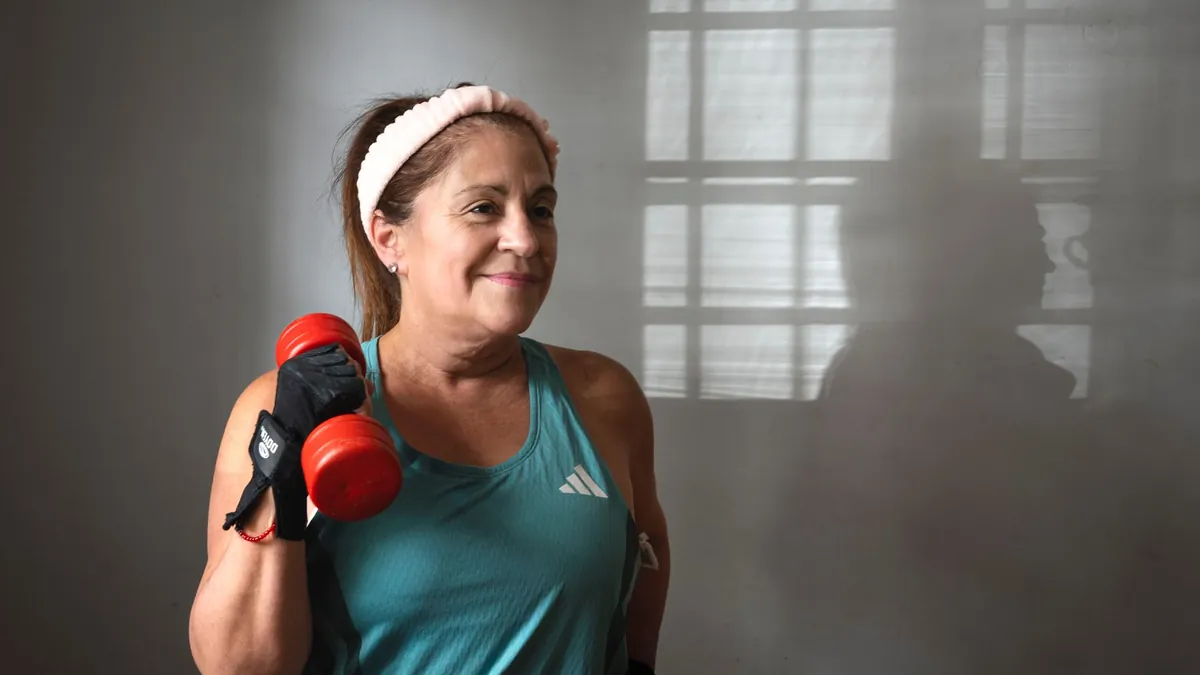
When you lose weight, you lose some fat and some muscle. Younger women can rebuild muscle fairly easily. After 50, it's harder, and losing muscle can leave you weaker, more tired and more likely to regain the weight. The two best tools for protecting it are protein and strength training.
How much protein do you need?
The official minimum for adults is 0.8 grams of protein per kilogram of body weight per day. That number is meant to prevent deficiency, not to protect muscle while you lose weight. Many experts on aging, including an international study group known as PROT-AGE, recommend 1.0 to 1.2 grams per kilogram for healthy adults over 65, and more for people who are active or losing weight.
In everyday terms:
| Your weight | Protein per day (1.0–1.2 g/kg) |
|---|---|
| 140 lb (64 kg) | about 64–77 g |
| 160 lb (73 kg) | about 73–87 g |
| 180 lb (82 kg) | about 82–98 g |
| 200 lb (91 kg) | about 91–109 g |
If you have kidney disease, ask your doctor before increasing protein.
Spread it out: 25 to 30 grams per meal
Many women eat very little protein at breakfast, a bit at lunch and most of it at dinner. Research on muscle suggests it's better to spread it more evenly, with about 25 to 30 grams at each meal. A protein-rich breakfast also helps with cravings later in the day.
What 25 to 30 grams looks like
- 3 eggs plus a slice of cheese
- 1 cup of plain Greek yogurt with a handful of nuts
- 1 cup of cottage cheese
- A palm-and-a-half portion of chicken, turkey or fish (about 4 oz cooked)
- 1 can of tuna or salmon
- 1½ cups of lentils or beans (plant protein; pair with grains or seeds)
- Firm tofu, about 7 oz

Easy ways to eat more protein
- Fix breakfast first. Swap toast or cereal for eggs, Greek yogurt or cottage cheese.
- Build plates protein-first. Decide the protein, then add vegetables, then the starch.
- Keep protein snacks handy: cheese sticks, hard-boiled eggs, edamame, jerky with no added sugar.
- Use a powder if it helps. A scoop in a smoothie or oatmeal is a convenient top-up, not a requirement.
Protein works best with strength training
Protein gives your muscles the building blocks; resistance exercise gives them the reason to use them. Aim for two or three sessions a week that work your legs, back, chest and arms. Start light, with bands or dumbbells, and increase slowly. If you have joint pain, a physical therapist can show you safe moves.
Why this matters even more on GLP-1 medications
Medications such as semaglutide reduce appetite so much that many people eat too little protein. Studies have found that a meaningful share of the weight lost on these drugs can be lean mass. If you're taking one, or thinking about it, protein and strength training are essential. See natural alternatives to Ozempic and what to do after stopping.
For the full plan, read our guide to weight loss after 45.
Keep reading
 After 45
Weight Loss After 45: What Changes in a Woman's Body and What Actually Works
If the things that worked at 35 stopped working, it's not your imagination and it's not a lack of willpower. Your body really did change. Here's what changed, and what still works.
 After 45
Perimenopause Weight Gain: Why It Starts in Your 40s and What Actually Helps
Your periods are changing, your sleep is lighter, and the scale is moving the wrong way. Perimenopause can start years before menopause, and weight is often one of the first signs.
 After 45
Menopause Belly Fat: Why It Shows Up and How to Lose It
Your arms and legs look the same, but your jeans don't close anymore. Menopause belly is one of the most common complaints of women over 45, and one of the most misunderstood.