

Your neck holds up a head that weighs about 10 to 12 pounds. During the day, your muscles adjust constantly. At night, they're stuck with whatever angle your pillow gives them, for seven or eight hours.
The 6 most common causes
1. The wrong pillow height
Too high and your neck bends up; too low and it drops down. Side sleepers usually need a firmer, higher pillow to fill the space between ear and shoulder. Back sleepers need less height with support under the neck curve.
2. A pillow that's worn out
Most pillows flatten over time, and they flatten through the night too. If you fold your pillow in half to get comfortable, it's done.
3. Sleeping on your stomach
Stomach sleeping forces your head to one side for hours. It's the position most linked to morning neck pain.
4. Tension and stress
Stress tightens the muscles between your neck and shoulders. Many people also clench their jaw at night, which adds to it.
5. Age-related changes
After 50, the discs and joints in the neck naturally wear, which makes the neck less forgiving of a bad sleeping posture. MedlinePlus lists this wear as a common source of neck pain.
6. Screens during the day
Hours looking down at a phone or laptop strain the same muscles, and you pay for it overnight.
How to fix it
- Match the pillow to your position. Your nose should line up with the center of your body, whether you're on your back or your side.
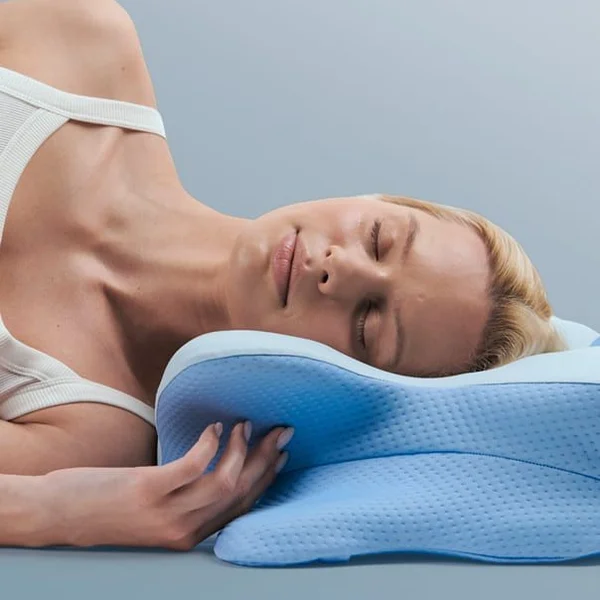
- Support the curve of your neck, not just your head. Contoured pillows are designed for exactly this.
- Train yourself off your stomach by hugging a pillow on your side.
- Warm up your neck in the morning with gentle turns and shoulder rolls, and use heat if it's tight.
- Raise your screens to eye level.
When to see a doctor
See a doctor if the pain follows a fall or accident, lasts more than a couple of weeks, spreads down your arm, or comes with numbness, weakness, fever or a severe headache.
The best sleeping position for your neck
On your back is generally easiest on the neck, with a pillow that supports the curve under your neck and keeps your head from tipping forward. On your side is the second-best option and the most popular; the key is a pillow tall and firm enough to keep your head level with your spine. On your stomach is the hardest on the neck, because your head is turned to one side all night. If you can't give it up, use a very thin pillow, or none.
How often should you replace your pillow?
Most pillows lose their support within one to two years. A simple test: fold your pillow in half. If it stays folded instead of springing back, it's no longer holding your head up. Memory foam pillows usually last longer than fiber ones, as long as the foam still returns to its shape.
Poor sleep and pain often go together after 45. If you're also waking up at 3 a.m., our guide on menopause brain fog covers why sleep matters so much for how you feel the next day.
Where an ergonomic pillow fits
If your stiffness is worst first thing in the morning and fades during the day, your pillow is the first thing to change. We reviewed the Derila Ergo, a butterfly-shaped memory foam pillow designed to keep the neck aligned in every position, with a 60-day return policy.
Frequently asked questions
Why do I wake up with a stiff neck every morning?
Usually because your neck spends hours bent out of line during sleep, from a pillow that's too high, too flat or worn out, or from sleeping on your stomach.
Can a pillow cause neck pain?
Yes. A pillow that doesn't keep your head level with your spine is one of the most common causes of morning neck pain.
What is the best pillow for a stiff neck?
A pillow that supports the natural curve of your neck and matches your sleep position. Contoured memory foam pillows are designed for this.
How do I get rid of a stiff neck fast?
Apply gentle heat, do slow neck turns and shoulder rolls, and stay gently active. Most mild stiffness improves within a day or two.
Is it bad to sleep without a pillow?
For stomach sleepers it can help. For back and side sleepers, no pillow usually lets the head drop out of line.
When is a stiff neck serious?
See a doctor after an injury, if pain lasts more than two weeks, spreads to your arm, or comes with fever, severe headache, numbness or weakness.
This article is for information only and is not medical advice.

Audrey Larson
Audrey Larson is a health journalist and wellness investigator with more than 10 years of experience covering supplements, nutrition, and consumer health. With a background in Biomedical Science and Clinical Research, she specializes in analyzing scientific evidence behind health products and debunking misleading claims, misinformation, and fake health trends. As a Health & Wellness Evaluation Specialist for Olivewell Report, Audrey reviews peer-reviewed research, ingredient transparency, and manufacturing standards to separate fact from fiction. Her work emphasizes scientific integrity and practical guidance, helping readers make informed decisions about their health and well-being.
Keep reading
 Sleep & Wellness Gear
Magnesium Oil: Benefits, How to Use It (On Your Feet, for Sleep and Cramps) and Does It Work?
A few sprays on your feet before bed, and people swear they sleep like a baby and wake up without cramps. Magnesium oil is one of the most searched sleep and muscle remedies in America. Here's what it is, what it does, how to use it and whether it really works.
 Sleep & Wellness Gear
Bifocals vs. Progressives vs. Reading Glasses: Which Is Right After 45?
First it's the menu. Then the pill bottle, then your phone. By 45, almost everyone needs help seeing up close. The question is which kind of glasses fits your life. Here's a simple comparison.
 Sleep & Wellness Gear
Derila Ergo Pillow Reviews 2026: Does It Really Help Neck Pain? Our Honest Review
The butterfly-shaped memory foam pillow for neck pain: design, price and the 60-day return policy.