
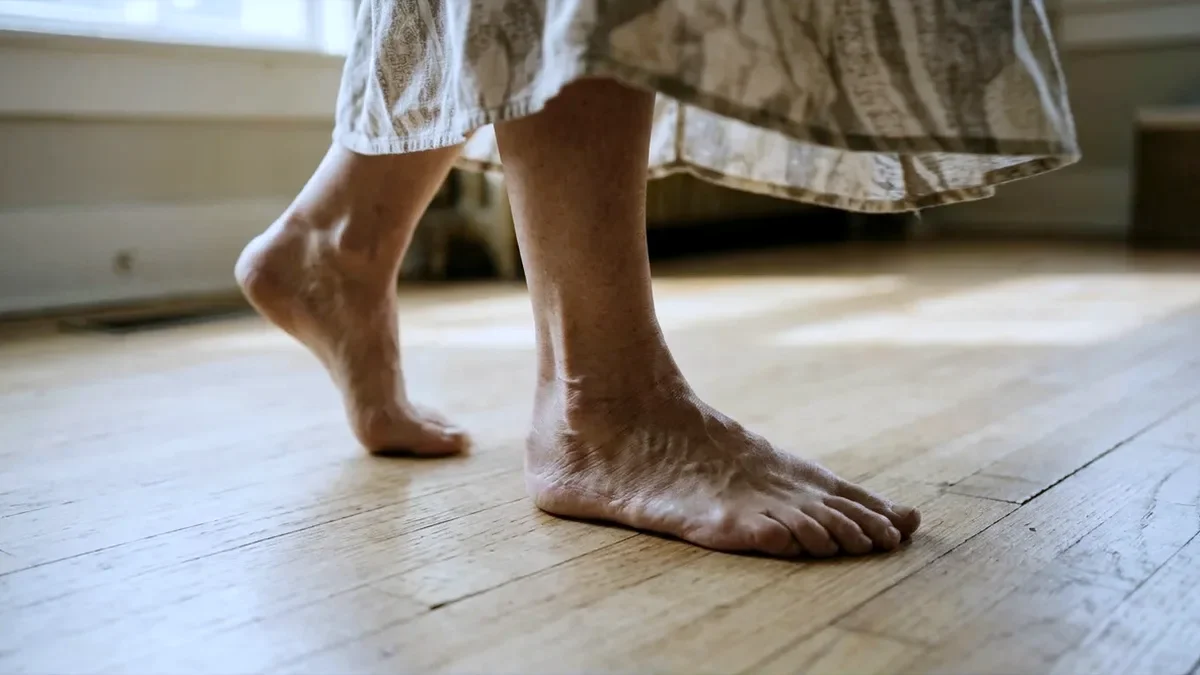
Toenails grow slowly, about a millimeter a month, and even more slowly as we age. That slow growth is one reason problems build up quietly and take so long to clear.
The main causes
1. Toenail fungus
Nail fungus is the number one cause. According to MedlinePlus, it's more common in older adults and in people with diabetes or poor circulation. Signs: yellow or brown color, thickening, crumbly edges and sometimes a mild odor. It usually starts at the tip and spreads back.
2. Age itself
Even without fungus, nails tend to get thicker and more brittle with age, as growth slows and cells build up.
3. Circulation and diabetes
Less blood flow to the feet means slower healing and an easier time for fungus. If you have diabetes, check your feet daily and see a podiatrist for nail care.
4. Pressure and injury
Years of tight shoes, running or stubbing a toe can damage the nail bed, leading to thick, discolored nails.
Fungus or not? A quick check
| More likely fungus | More likely age or injury |
|---|---|
| Yellow, white or brown color | Nail thick but normal color |
| Crumbly, flaky edges | Smooth surface |
| Spreading to other nails | Only one nail, after an injury |
| Mild odor | No odor |
Only a lab test can confirm fungus, and a podiatrist can do it in minutes.
What helps
- Trim straight across and gently file down the thickness after a shower, when nails are softer.
- Keep feet dry. Dry between your toes, change socks daily and choose breathable shoes.
- Disinfect your shoes and don't walk barefoot in shared showers or pools.
- Apply a topical treatment every day. Consistency matters more than anything: the healthy nail has to grow out, which takes 6 to 12 months for a big toe.
- See a doctor if it's painful, spreading fast, or if you have diabetes. Prescription options exist.
How long does it take to clear?
This is where most people give up too early. Fingernails replace themselves in about 6 months, but a big toenail can take 12 to 18 months to grow out completely. Whatever you use, you won't see the old yellow part turn clear; you'll see healthy, clear nail growing in from the base and pushing the damaged part out. Take a photo on day one and compare every month. If the new growth at the base looks clear, it's working.
Home remedies: what's worth trying
- Tea tree oil has natural antifungal properties and is one of the most common ingredients in topical nail oils.
- Vinegar soaks are popular, but there's little evidence they clear an infection on their own.
- Vapor rub has some anecdotal support; results are mixed.
- Filing and trimming help every treatment work better by thinning the nail so it can absorb more.
Consistency matters more than which option you pick. A product you'll actually use every day beats a "stronger" one you forget.
Where a topical nail oil fits
Many people prefer to start with a natural topical routine. Two of the most searched options are Kerassentials, a blend of essential oils and vitamins applied with a brush, and ProNail Complex, a spray-on formula. Our reviews break down what's inside, how to use them and their money-back guarantees.
Frequently asked questions
Why are my toenails thick and yellow?
The most common cause is a fungal nail infection. Age, poor circulation, diabetes and years of pressure from shoes can also make nails thick and discolored.
Is toenail fungus common after 50?
Yes. Nail fungus becomes much more common with age, as nails grow more slowly and circulation to the feet decreases.
How long does it take to get rid of toenail fungus?
Usually 6 to 12 months or more, because the healthy nail has to grow out and replace the damaged part.
Can thick toenails go back to normal?
Often, yes, once the cause is treated and the healthy nail grows out. Thickness from long-term injury may not fully reverse.
Does tea tree oil work for toenail fungus?
Tea tree oil has natural antifungal properties and is used in many topical nail products. It works best applied consistently every day for months.
When should I see a doctor for toenails?
See a doctor or podiatrist if the nail is painful, spreading quickly, or if you have diabetes or poor circulation.
This article is for information only and is not medical advice.

Audrey Larson
Audrey Larson is a health journalist and wellness investigator with more than 10 years of experience covering supplements, nutrition, and consumer health. With a background in Biomedical Science and Clinical Research, she specializes in analyzing scientific evidence behind health products and debunking misleading claims, misinformation, and fake health trends. As a Health & Wellness Evaluation Specialist for Olivewell Report, Audrey reviews peer-reviewed research, ingredient transparency, and manufacturing standards to separate fact from fiction. Her work emphasizes scientific integrity and practical guidance, helping readers make informed decisions about their health and well-being.
Keep reading
 Skin, Hair & Nails
Castor Oil for Hair Growth: How to Use It, How Long It Takes, and the Blend That Makes It Easier
Grandma swore by it, and now it's all over social media: a few drops of castor oil on the scalp for thicker, longer hair. Here's exactly how to use castor oil for hair growth, why so many women give up on it, and the blend that makes it easy.
 Skin, Hair & Nails
Rosemary Oil for Hair Growth: Does It Really Work? (The Study, How to Use It and Before & After)
It's the most searched natural hair remedy in America, and unlike most viral trends, this one has a real clinical trial behind it. Here's what rosemary oil actually does for thinning hair, how to use it so it works, and the mistake that makes most people quit too early.
 Skin, Hair & Nails
Best Hair Growth Oil (2026): Rosemary, Castor and What Actually Works for Thinning Hair
Rosemary, castor, coconut, pumpkin seed: every oil promises thicker hair. Only a few have real research behind them. Here's which hair growth oils actually work, how to use them, and the one we'd buy.